

In many families, love is present, loyalty is present, and still something feels off. We see it when a grandparent says one thing, a parent acts another way, and a child receives both messages at once. The issue is not always open conflict. Often, it is confusion. Quiet, repeated, and hard to name.
Values confusion happens when family members carry different rules about what is right, fair, respectful, or expected, but those rules are not made clear.
We have seen this in homes where three generations share space, decisions, or emotional influence. One person values obedience. Another values independence. Another wants peace at any cost. Nobody says it plainly. Everyone reacts. Then tension grows.
Mixed messages create silent stress.
In multi-generational families, this becomes more visible because time itself lives inside the home. Older members were shaped by one social world. Younger ones grew up in another. Parents in the middle often try to translate both, and they become tired. Sometimes resentful too.
Where the confusion begins
Values confusion rarely starts with bad intent. It often begins with inheritance. We inherit ways of speaking, ways of deciding, and ways of judging what a good person should do. If those inherited values are not examined, they become automatic.
Then a family faces a moment that asks for choice. A daughter wants privacy. A grandfather sees privacy as distance. A mother agrees with privacy in theory, but still expects full disclosure. The daughter hears, “Be honest,” and also hears, “Hide parts of yourself if you want peace.” That split is where confusion takes root.
Research supports how common these gaps are. A study involving 701 families found that intergenerational value discrepancies were common in both immigrant and non-immigrant families. We think this matters because it shows that values confusion is not limited to one culture or one family type. It is a human pattern.
Common starting points include:
Different ideas about respect and authority
Conflicting views on money, work, and sacrifice
Unspoken roles based on age, gender, or family position
Mixed standards for freedom, loyalty, and privacy
When these differences stay hidden, each person assumes their view is normal. Then normal becomes a weapon. “You are selfish.” “You are controlling.” “You do not care about family.” The words point to behavior, but the real clash is deeper. It is about values.
How generations carry different moral codes
Generations do not just have different tastes. They often carry different moral codes. One generation may connect love with duty. Another may connect love with emotional openness. A third may connect love with respect for boundaries.
When family members use the same words but mean different things, confusion grows fast.
Take success as an example. For an older relative, success may mean stability, endurance, and keeping the family together. For a younger adult, success may mean mental balance, personal meaning, and chosen relationships. Both are serious values. But when each side treats its own standard as the only valid one, family bonds start to tighten in painful ways.
Research published in the Journal of Family Psychology shows that intergenerational value differences vary across groups and generations, with effects on family solidarity and cohesion. We read this as a sign that the issue is not just disagreement. It affects trust, belonging, and the emotional tone of family life.
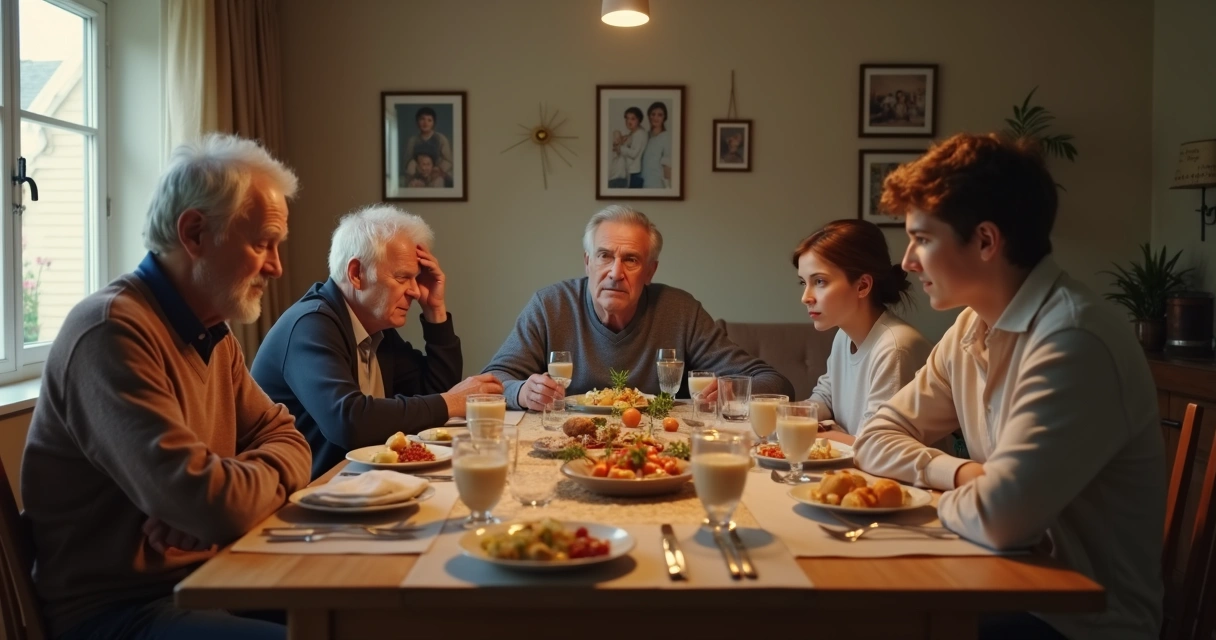
When culture and adaptation add pressure
For some families, values confusion becomes even stronger when cultural adaptation enters the picture. Children and young adults may absorb the norms of school, work, media, and peer groups faster than their parents or grandparents. This can create a sharp emotional split.
We have heard stories like this many times. A parent says, “This is not how we do things.” A son answers, “But this is how life works now.” Both feel exposed. Both feel dismissed.
A study of Chinese immigrant families in the United States found that higher acculturation among younger generations was linked to more conflict over norms and values with parents. That finding helps name a pattern many families feel but struggle to explain.
This kind of strain often shows up around:
Dating and marriage choices
Career paths and financial risk
Religious practice and moral identity
Language use and social belonging
The pain here is not only about change. It is also about fear. Older generations may fear loss of roots. Younger generations may fear loss of self. If nobody names these fears, they hide behind judgment.
What values confusion looks like in daily life
Values confusion is not always dramatic. Sometimes it appears in very ordinary scenes. A grandmother gives advice that was once seen as care, but now feels intrusive. A father asks for gratitude, but the way he asks sounds like emotional debt. An adult daughter wants to help her aging mother, but also wants limits that the family interprets as coldness.
Confusion often appears as recurring arguments that never reach the real issue.
One useful reference comes from research in The Gerontologist, which identified six common themes of conflict between aging parents and adult children, including communication style, lifestyle choices, and caregiving expectations. We think these themes matter because they show how value clashes attach themselves to practical life.
Signs often include:
Rules that change depending on who is speaking
Guilt used in place of clear requests
Praise for loyalty but punishment for honesty
Silence around tension, followed by emotional outbursts
One generation feeling disrespected while another feels controlled
These families may say, “We are close,” but the closeness has pressure inside it. People perform roles to avoid conflict. They say yes when they mean no. They hide choices. They become polite, but not open.
Peace without clarity is fragile.

How families can reduce the confusion
No family removes all value differences. That is not the goal. The goal is clearer awareness. We can disagree without turning difference into moral failure.
A helpful process often includes a few simple moves.
Name the value behind the reaction. Ask, “What feels threatened here?”
Separate values from habits. Not every old habit is a lasting principle.
Make expectations speakable. Hidden rules are the ones that wound the most.
Allow more than one form of respect. Silence is not the only sign of care.
Set limits without contempt. Boundaries work better when they are calm and direct.
Sometimes one conversation changes the tone. Sometimes it does not. We think families need patience here. Old roles do not loosen in one afternoon. Still, clarity changes the field. Once people can say, “You call this love, but I experience it as control,” something real begins.
Conclusion
Values confusion in multi-generational families appears when different moral expectations share the same emotional space without enough clarity, translation, or mutual respect. The result is not only disagreement. It is inner tension, role strain, and repeated misunderstanding.
We believe the way forward starts with honest naming. Not blame. Not forced agreement. Honest naming. When a family can identify which values are inherited, which are chosen, and which are being imposed through guilt or fear, relationships become less reactive and more conscious. That does not erase pain. But it helps each person stand in truth without cutting the bond.
Frequently asked questions
What is values confusion in families?
Values confusion in families happens when relatives hold different beliefs about what is right, respectful, or acceptable, but those beliefs are not clearly spoken. People then react to each other without understanding the standards behind the behavior. This creates mixed messages and repeated tension.
How does it affect family relationships?
It affects family relationships by creating guilt, resentment, distance, and frequent misunderstandings. Family members may feel judged, controlled, or ignored. Over time, trust can weaken because people stop feeling safe to speak honestly.
Why do generations have different values?
Generations have different values because they grow up in different social, cultural, and economic conditions. Older and younger family members are shaped by different ideas about work, authority, identity, privacy, and love. These differences become sharper when life changes fast.
How can we handle values conflicts?
We can handle values conflicts by naming the real issue, listening without rushing to defend, and making expectations clear. It also helps to separate family habits from deeper principles. Calm boundaries and direct language reduce confusion and lower emotional pressure.
What are signs of values confusion?
Signs of values confusion include recurring arguments, unclear rules, guilt-based communication, and strong reactions to everyday choices. It also appears when family members say they care for each other but feel constantly misunderstood or emotionally restricted.